Moms Ask Me About These 5 Natural Options for ADHD Focus and Meltdowns Every Week. Here's How I'd Rank Them.
I read all five labels line by line, checked each one against what's actually been studied in kids, and ranked them the way I'd walk a mom through it at the end of a session. One came out clearly on top. It isn't a gummy.
By Maren Whitcomb, OTR/L · Pediatric Occupational Therapist · 12 years
Updated September 2026 · 8 min read
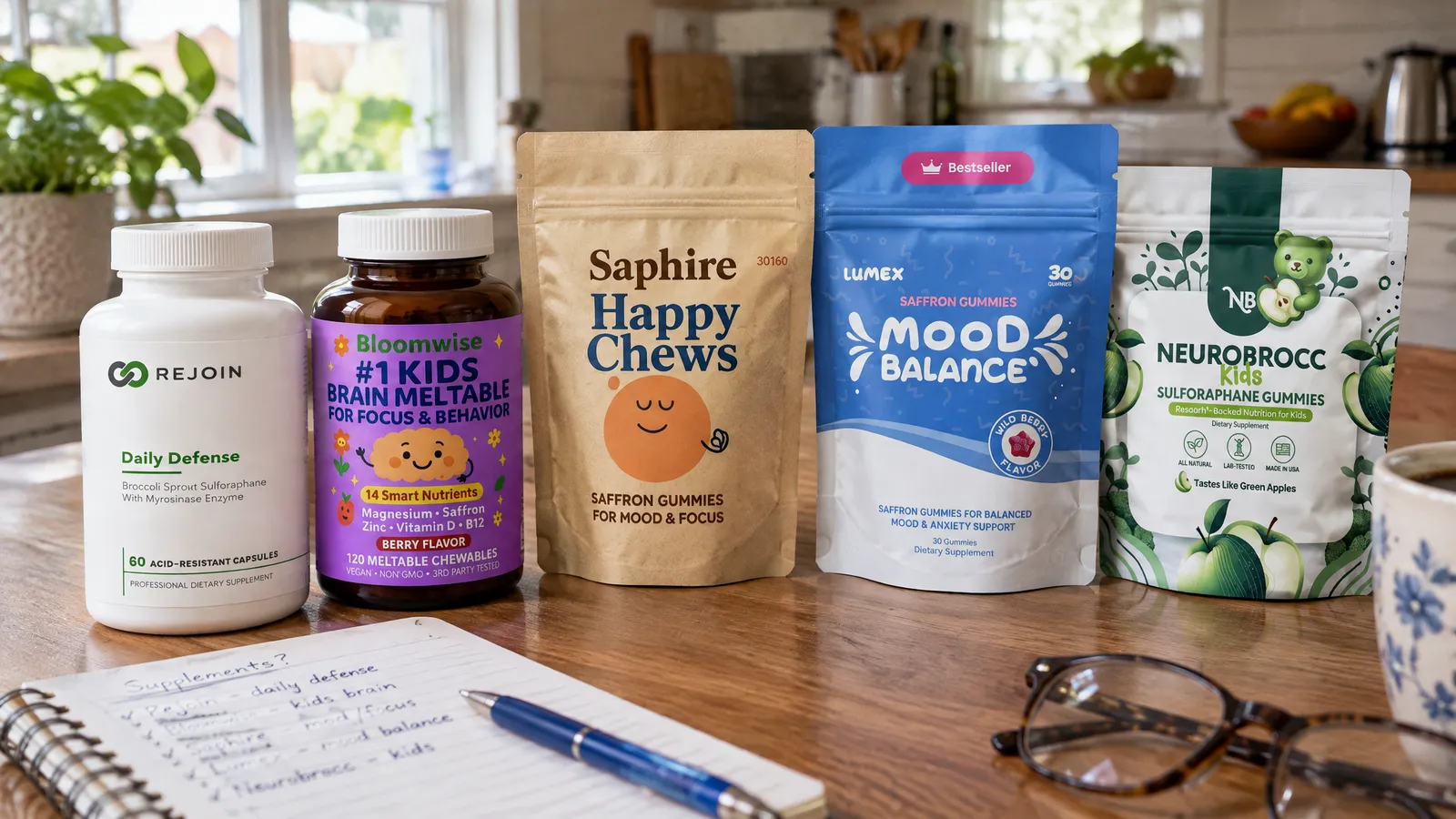
The five I get asked about most, read label by label.
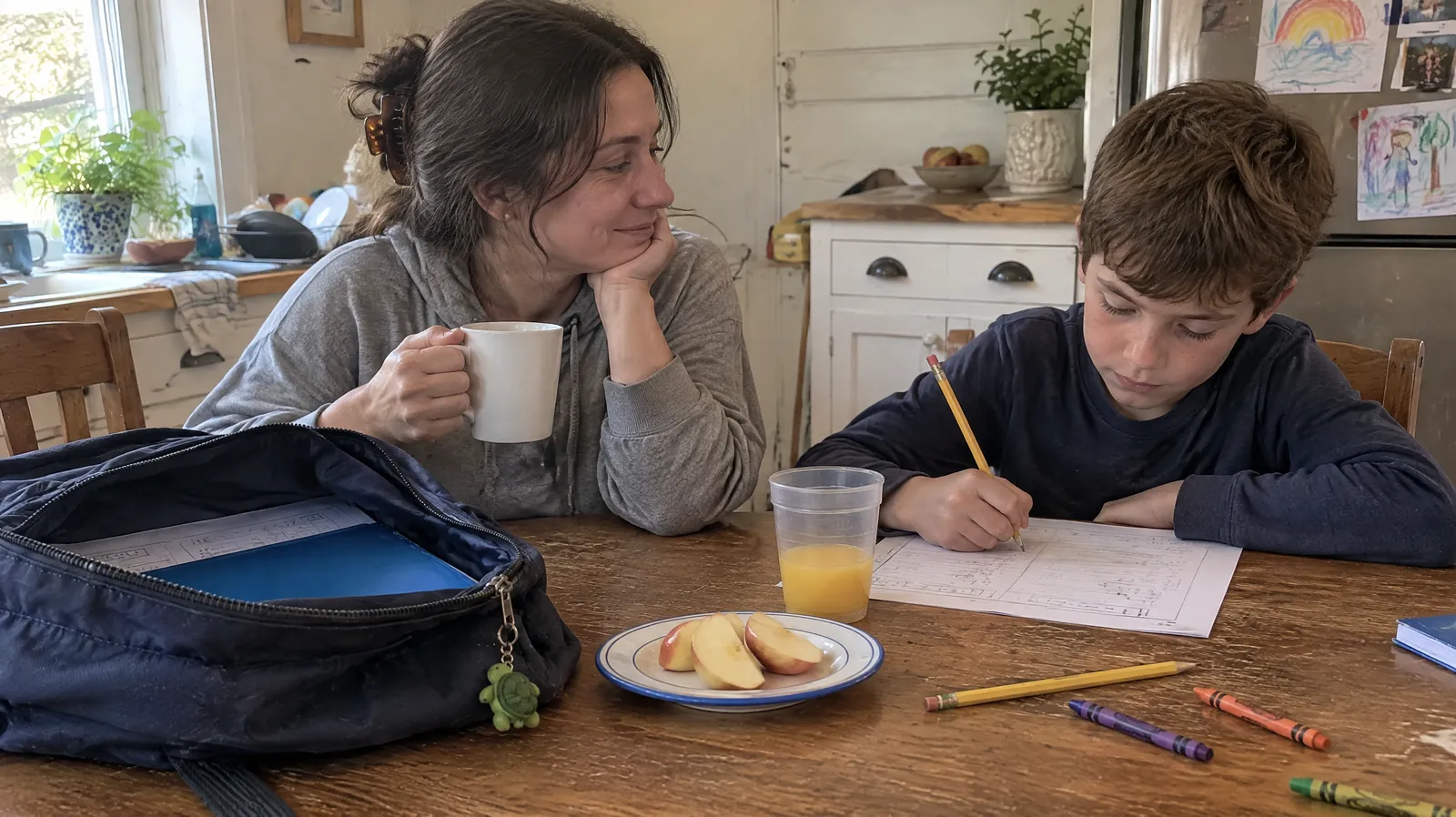
If you're reading this, I'd guess you've had the car ride.
He held it together all day at school. Then the car door shuts and he falls apart. The wrong snack, the seatbelt, his sister breathing. You sit in the pickup line wondering what you did wrong this time.
I'm a pediatric occupational therapist. I've spent 12 years on the floor with kids like yours, most of it in my own small clinic, so let me say this before anything else: you are not doing it wrong. And neither is he.
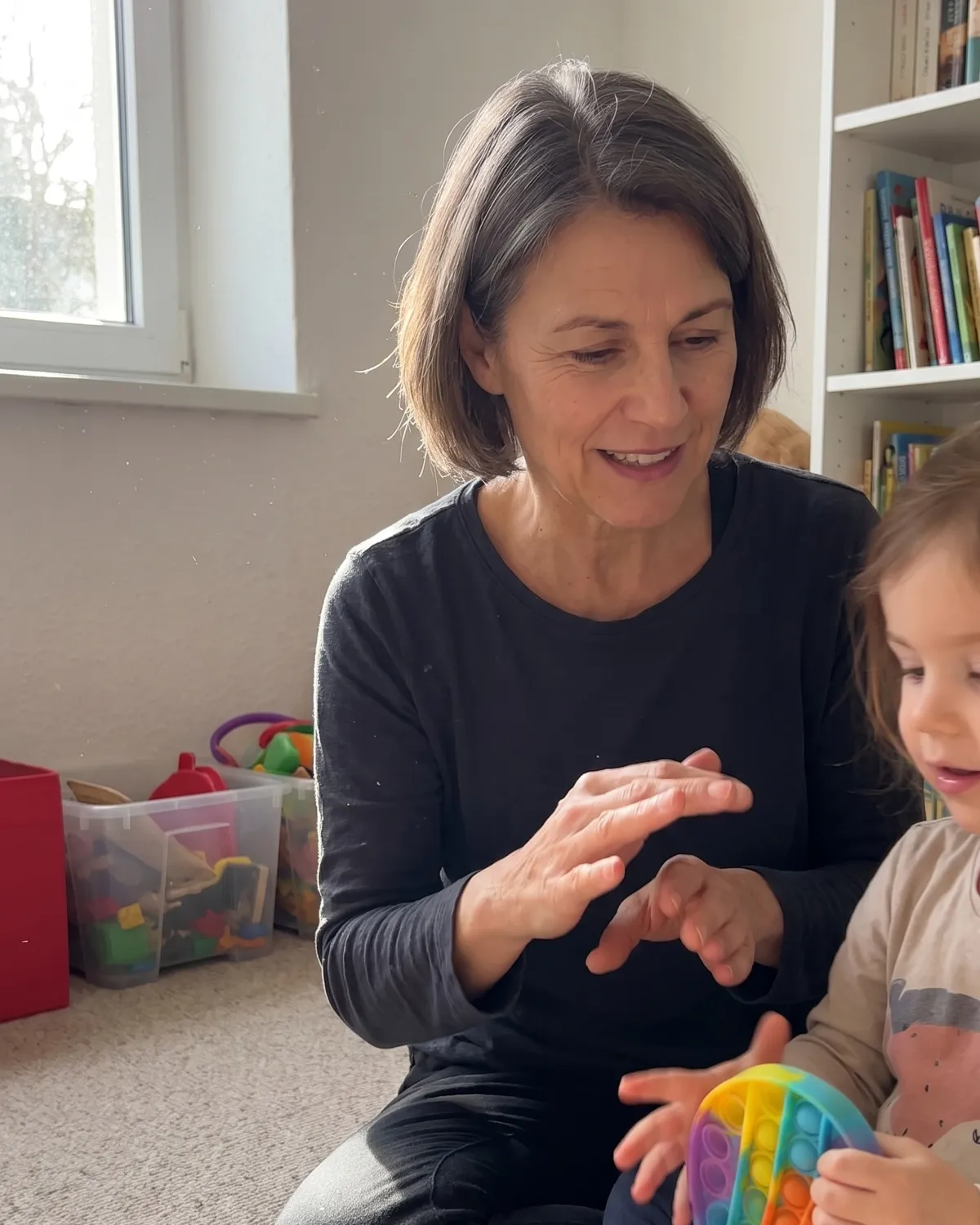
On the floor, where most of my day happens.
They're not being difficult. They're having a hard time.
Some boil over in class. Others hold it in all day and let it out in the car with you, because you're the safe one.
A few years ago, a mom who'd just moved here from Tokyo sat in on her son's session. Afterwards she asked me, "Why don't American parents give their kids broccoli sprouts?" I honestly thought she was joking. She wasn't. So I went home and looked it up, and what I found changed how I work. That's where "the broccoli thing" on this list comes from.
With the mom who asked me the broccoli sprout question.
Now, every week, a mom asks me some version of the same question. "We tried the gummies. Should we try the saffron ones? What about the broccoli thing?" I'm tired of answering it in the hallway in two minutes. So I read the labels on the five she asks about most and ranked them.
Why the sticker chart didn't fix it
Sticker charts. No-sugar weeks. The calm-down corner. I've recommended all of them, and I still do. They work on the outside. But the heat is on the inside. Something inside their brain is running hot, and nobody's cooling it down.
Here's the picture I give parents. Every cell in the body, brain cells included, has a defense switch called Nrf2. Switched on, cells make their own antioxidants and run their own clean-up crew. Think of it as the brain's cooling system. Now picture that switch stuck off in your kid, so the heat builds over the school day until it has to go somewhere. Usually the back seat.
That's a picture, not a diagnosis. In the picture, sulforaphane is the key that flips the switch back on. It isn't a medication. It comes from a vegetable: broccoli sprouts.
Maren Whitcomb, OTR/L, in her clinic.
How I ranked them
I scored each one out of 10 on six things. The overall grade is the average of the six, so you can check my math.
Evidence in kids with ADHD. Is there a placebo-controlled trial in kids with ADHD on the main ingredient?
Dose vs what was studied. How much of that ingredient does your child actually get in a day, compared with what the research used?
Sugar and fillers. The sugar line, and the "other ingredients" small print.
Easy for kids to take. The form, how many a day, and whether it survives a picky eater.
Label honesty. Does the front match the panel? Are there blanks, either/or ingredients, or claims that contradict each other?
Value. Price per bottle, and what you're getting for it.
One thing first
Nothing on this list is a replacement for what your child's doctor has prescribed. Everything here is something families use alongside their usual care. If your child takes medication, talk to your pediatrician before you add anything. I'm an OT, not a prescriber, and I'd tell you the same thing in my clinic.
The one I'd try first: the ingredient that was studied in kids 6 to 11, a real amount of it, and no gummy.
A9.3/10Overall grade
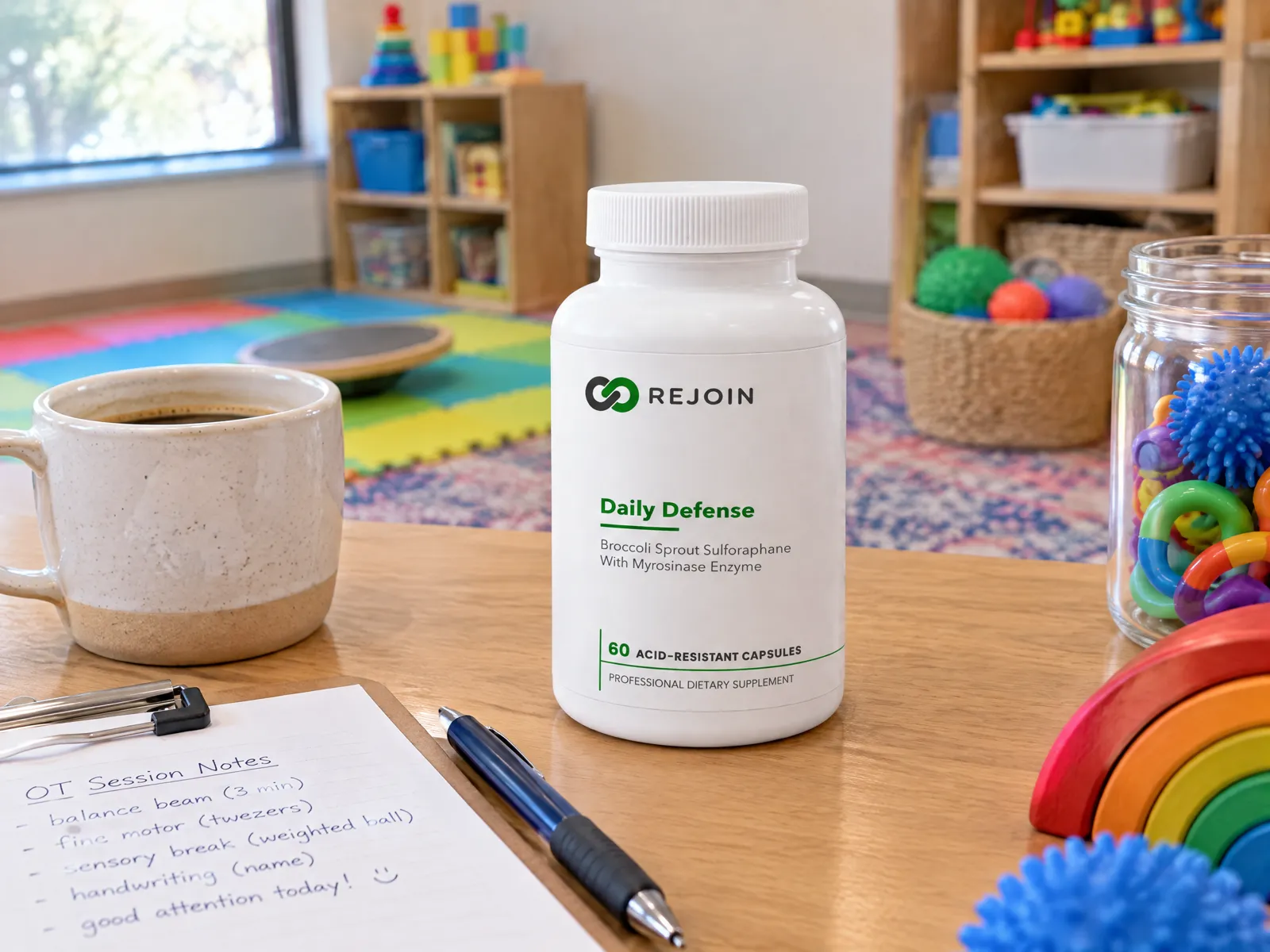
The bottle on my clinic desk. It's the one my grandson takes.
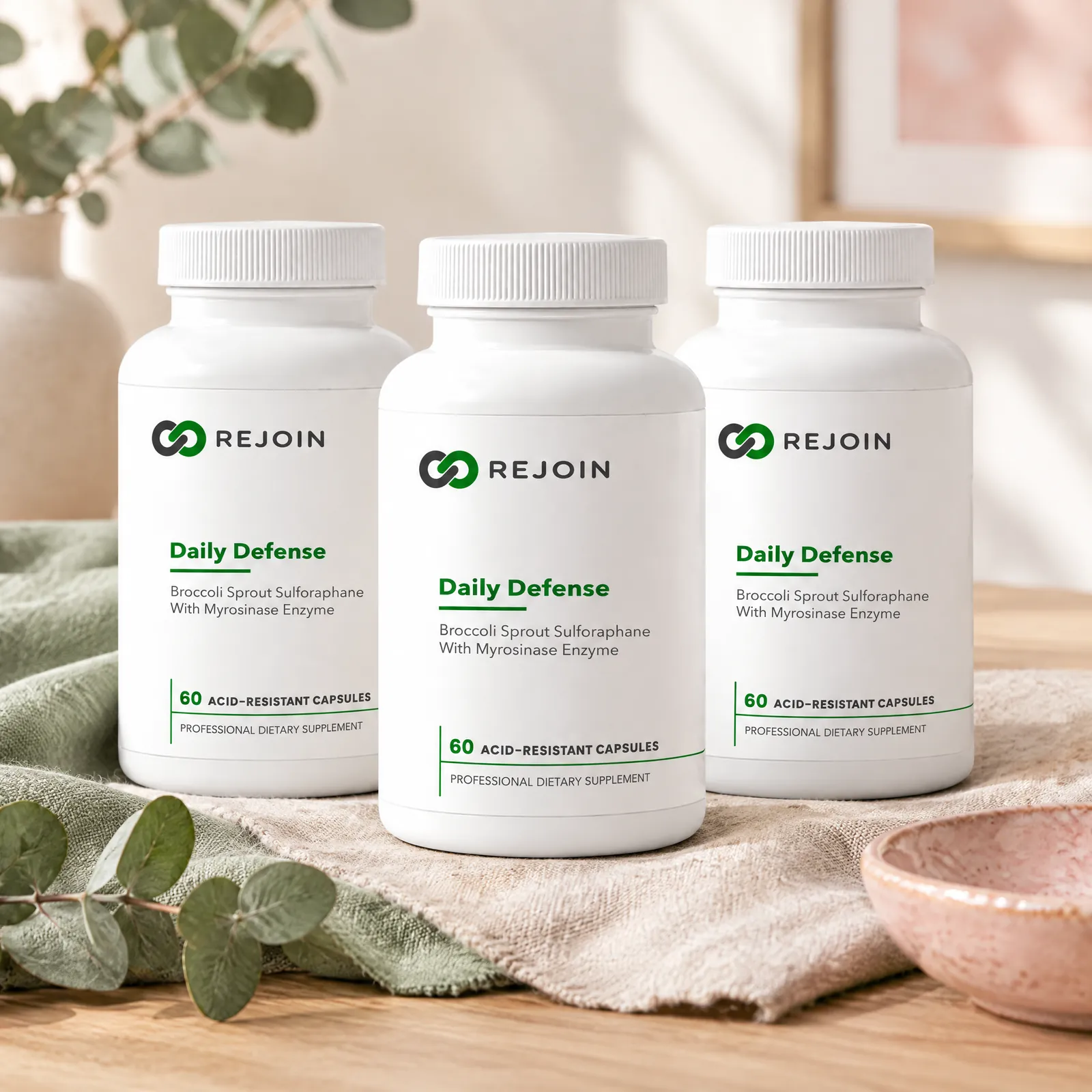
Price: $32.95 a bottle on subscribe · $37.95 one-time · Buy 2 Get 1 Free ($58.95 on subscribe)
Guarantee: 90-day money-back · Supply: each bottle is a 30-day supply
Kids serving
One or two capsules a day (16 mg each; two = 32 mg). Pediatrician first.
Main ingredient
Sulforaphane from broccoli sprouts, on its own line of the label
Enzyme
Myrosinase built in, the enzyme that makes sulforaphane
Form
Capsule. Swallow it whole, or open it into something cold
Sugar
None. It's a capsule, so there's no gummy base
Left out
No maltodextrin, no fillers, no black pepper, no wasabi
Evidence
2025 placebo-controlled trial: 70 kids aged 6 to 11 with ADHD, added to usual care
My take
Two products on this list use sulforaphane. This is the one with enough of it in the capsule to take seriously.
The research is why it's here. In a 2025 randomized, placebo-controlled trial, 70 kids aged 6 to 11 with ADHD all kept their usual medication. Half had sulforaphane added on top. Half had a placebo added. After 8 weeks, parents and teachers both rated less inattention and hyperactivity in the sulforaphane group than with placebo. Side effects were similar to placebo.
The teacher part matters to me. A parent can hope her way into seeing a change. A teacher has no idea what you gave him at breakfast. When both sets of ratings move the same way, I pay attention.
Now the dose. The trial used 30 mg a day. Each Rejoin capsule is 16 mg, so two capsules is 32 mg, in line with what was studied. That's 80 times the sulforaphane in NeuroBrocc's daily serving, the only other product here built on the same ingredient. This is one trial, and not every trial agreed, so I call it early science. It's also the closest thing on this page to what was actually studied in kids your child's age.
What I do at home
Moms always ask, so here it is. My grandson is 8 and has ADHD, and he takes Rejoin. Two capsules a day, stirred into his yogurt. Before he had a single one, I sat down with his pediatrician and told her what I wanted to add and why. He stays on his usual care. This goes on top of it.
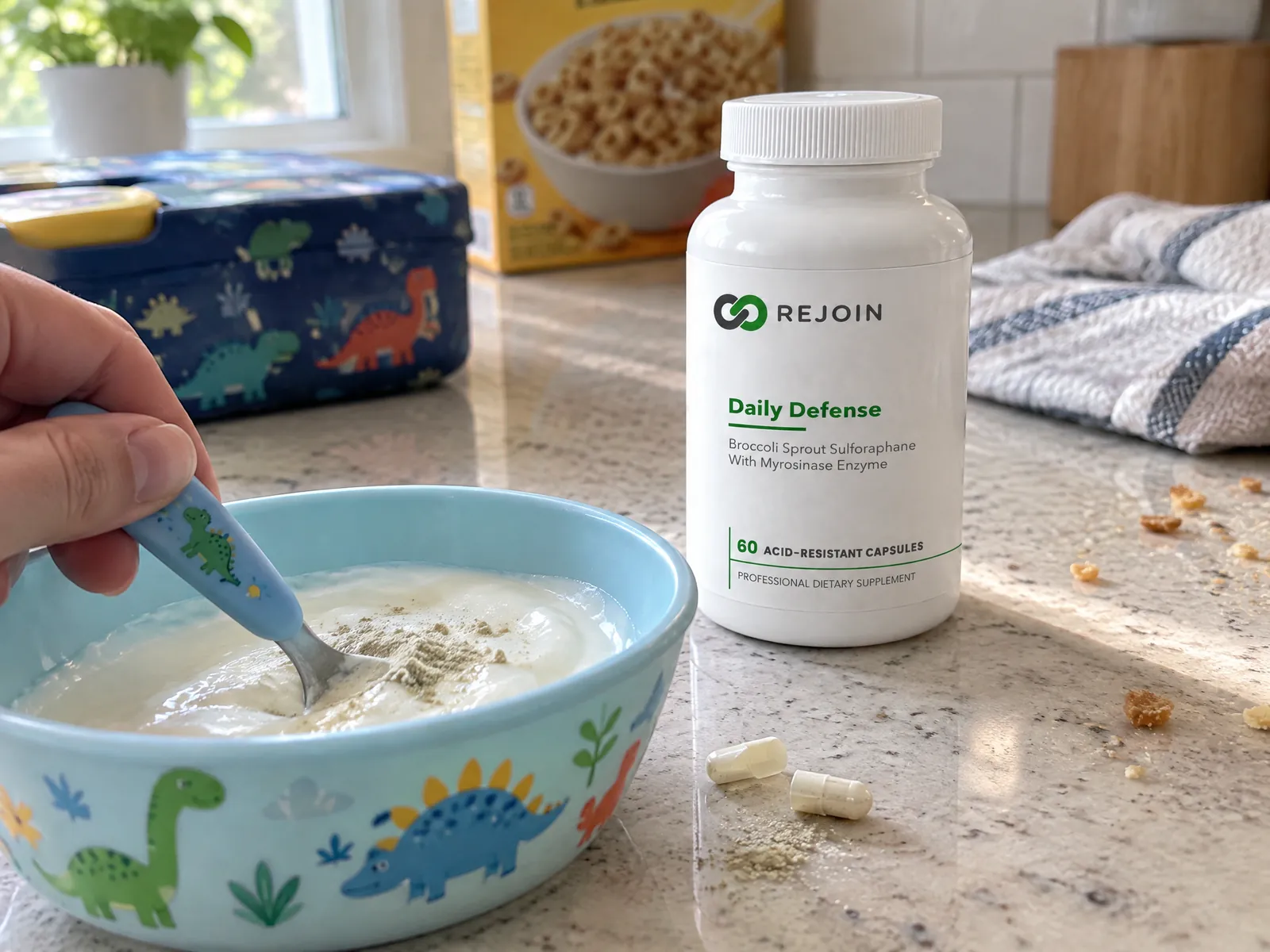
He won't swallow pills, so every morning I pull both capsules open over a few spoonfuls of cold yogurt and stir them in. That's the whole routine. If your child can swallow a capsule whole, that's even simpler. The one thing I never do is put it in anything warm.
What I watched was the ordinary stuff. How the mornings went. Whether homework started without a standoff. What the car ride home looked like. I wrote it down, because memory is a bad witness when you want something to work. That's what I'd tell you to do too: pick two or three moments in your day, write down what they look like now, and look again at week 8. Not day 3. Week 8, when the study measured.
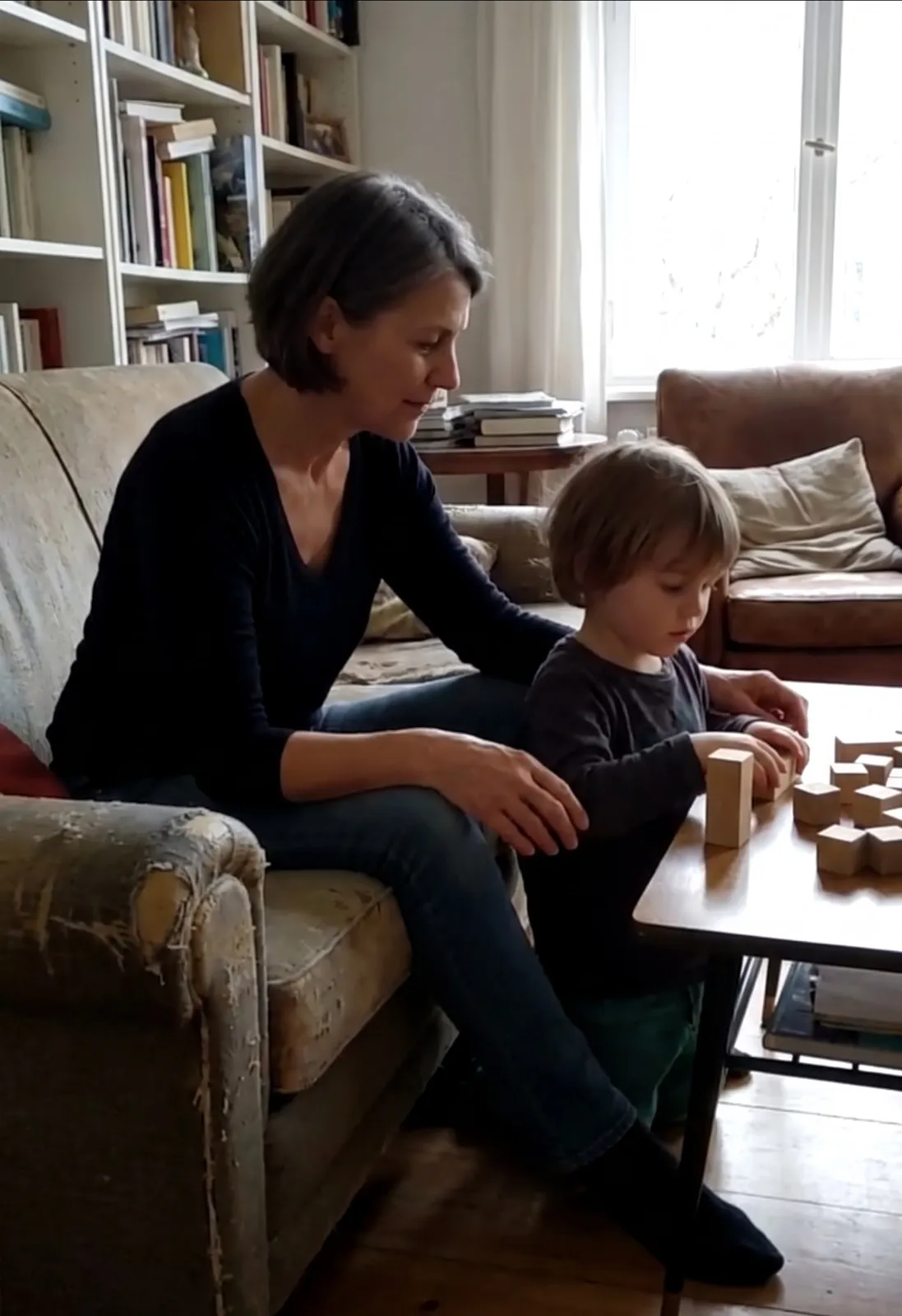
Block time with my youngest grandson.
What it's actually like to take
Talk to your pediatrician first. For kids, it's one or two capsules a day (16 mg each), opened into something cold like yogurt, applesauce or a smoothie. Two capsules is 32 mg, in line with the 30 mg a day used in the 2025 trial.
Rejoin Daily Defense, opened into a spoonful of cold yogurt.
If he can swallow a capsule, that's the simplest route. If he can't, pull it open and stir it into a spoonful of yogurt. Cool, never hot. I've taken it myself. Stirred into cold yogurt it's mild, and my grandson eats it without a fuss.
For the kid who won't touch anything green, this is what makes it possible at all. Try getting a kid who only eats crackers to chew on bitter sprouts. A couple of capsules in his yogurt is a much smaller ask, and one bowl a day is easier to keep going than four chewables before school.
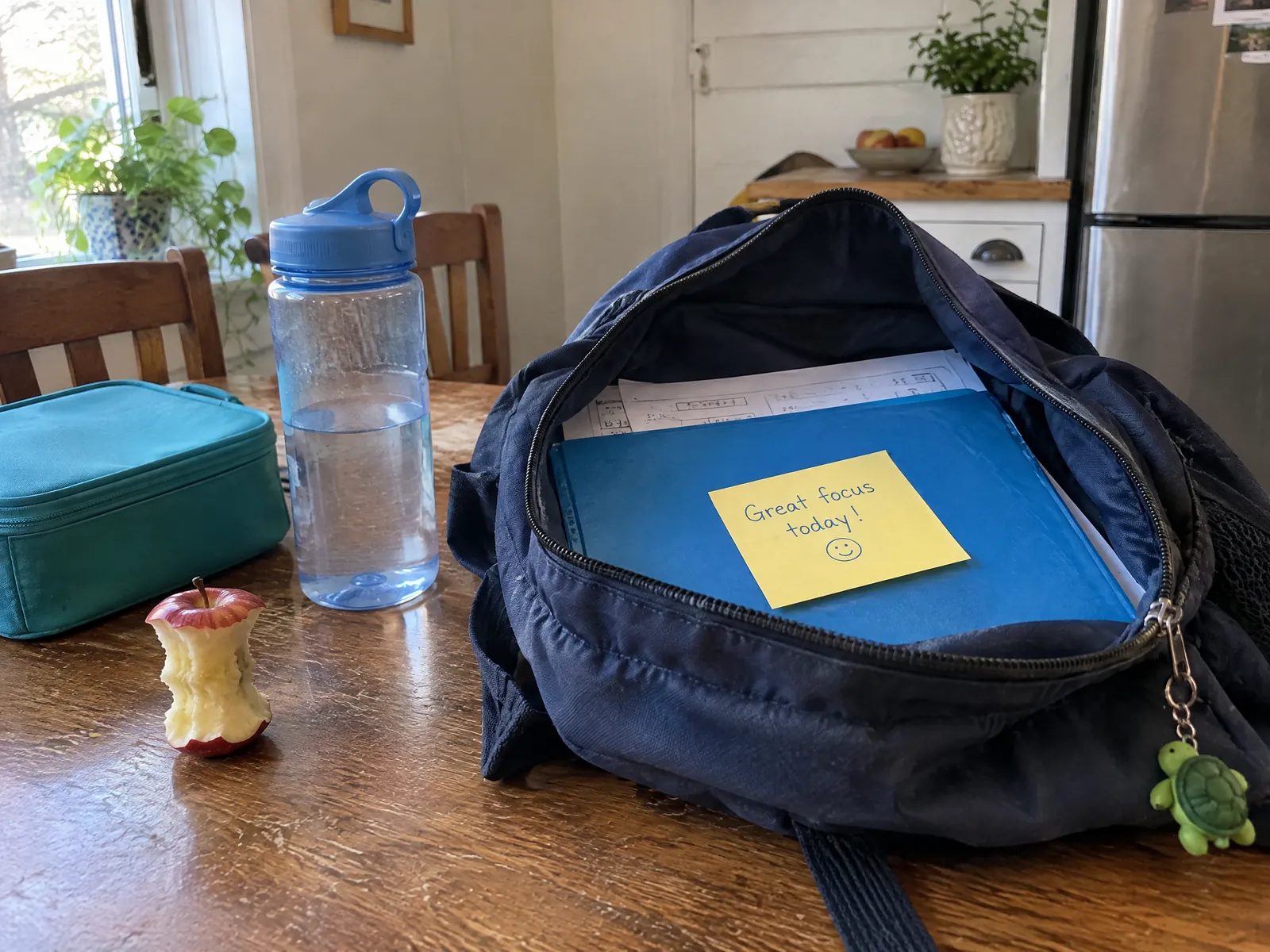
The kind of note families tell me about. "Great focus today."
Sub-scores
Evidence in kids with ADHD9.6
Dose vs studied9.8
Sugar & fillers9.6
Easy for kids8.7
Label honesty9.4
Value8.6
What I liked
The ingredient from the 2025 trial in kids 6 to 11 with ADHD, rated by parents and teachers
16 mg sulforaphane per kids capsule, stated on its own line
The enzyme that makes sulforaphane is built in
A capsule with no gummy base, so no sugar
Opens into cold food for kids who can't swallow pills
One or two a day, and a 90-day money-back guarantee
Why I still chose it for my grandson
It isn't a chewable. You'll need a spoon and something cold
It costs more per month than the two saffron gummies
Two capsules is 32 mg, in line with the 30 mg a day used in the 2025 trial. The enzyme that makes sulforaphane usable is built into the capsule. There's no sugar, and it opens straight into cold food, so a kid who won't swallow pills still gets the full amount. That's why it's the one my grandson takes.
Bottom line: If I could only suggest one thing on this list to a mom in my clinic, it's this. It's the ingredient that was actually studied in kids like hers, in an amount that isn't a rounding error, with no sugar, taken alongside the care he already has. Talk to your pediatrician, then give it the full 90 days.
In my clinic I have one rule: nothing gets judged before its trial window. The study measured at 8 weeks. A 90-day guarantee is the study window plus breathing room.
The one kids take without a fight. The label is where it gets messy.
B−6.7/10Overall grade
Price: $39.99 a bottle · first subscription order $20, then $39.99 a month
Guarantee: "60-day money-back" in the headline, unopened and unused bottles only per their FAQ
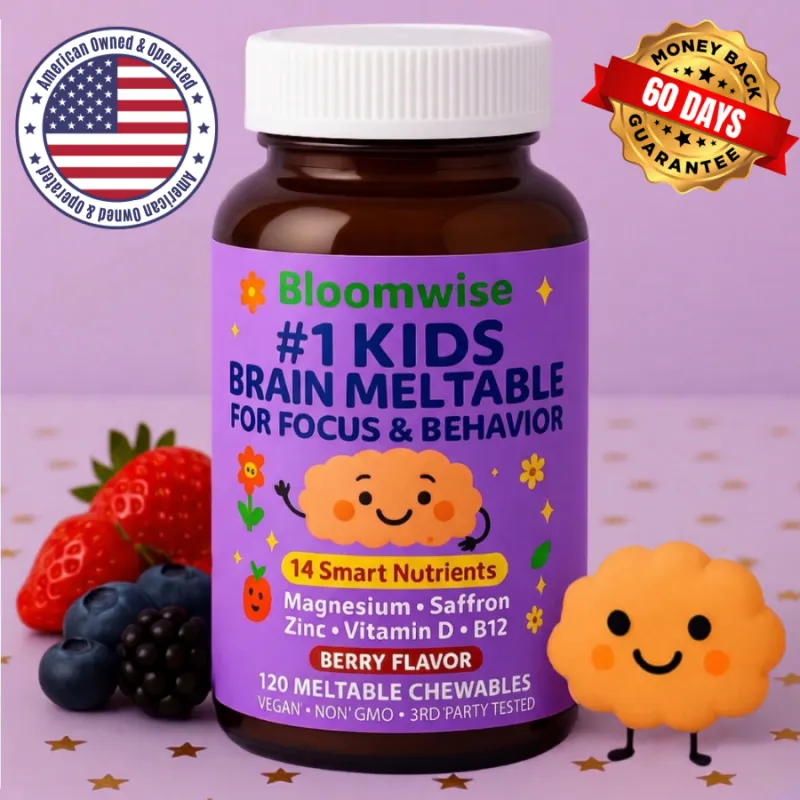
Bloomwise Kids Meltable.
Kids serving
4 meltable chewables a day, ages 4 and up
Main ingredients
Saffron extract 15 mg, plus L-theanine, inositol, magnesium, probiotics and more (a "14-in-1")
Sugar
Zero sugar claimed. Sweetened with "monk fruit or stevia"
Form
Berry meltable: chew it or let it dissolve on the tongue
My take
I understand why this one sells. A kid who gags on pills will usually let something dissolve on his tongue, and the brand leads with exactly that. There's no sugar on the label, and their own FAQ says plainly that it can't replace ADHD medication. I respect that.
So why not #1?
First, it's a different approach: saffron plus a long list of calm-and-focus nutrients, with no sulforaphane. I'm not going to referee the saffron research, so I scored it on what I can read off the label.
Second, the doses are small for how much is on the list. The magnesium is 37.5 mg, 9% of the daily value, and it takes four chewables to get even that.
Then the label hedges. It lists "monk fruit or stevia" and "inulin or FOS," so you can't be sure which one is in the bottle you bought. The guarantee says 60 days in the headline and 30 days in one checkout box, and the FAQ says refunds cover unopened, unused bottles only. You can't find out whether something works for your child without opening it.
Here's what I'd expect a mom to see: a kid who takes it without a fight, every morning. I wouldn't expect much past that from small doses spread this thin, and you'd be buying four a day to find out.
Sub-scores
Evidence in kids with ADHD6.0
Dose vs studied5.5
Sugar & fillers7.8
Easy for kids8.8
Label honesty5.6
Value6.3
What I liked
kid-friendly melt format
no sugar on the label
says openly it's not a medication replacement
broad formula in one product
What held it back
a different approach from sulforaphane
small doses spread across 14 ingredients
four a day
either/or ingredients
refunds on unopened bottles only
Bottom line: The best chewable here, and I mean that. If pills are a hard no in your house, it's the easiest thing on this list to get into him. But it's four chewables a day of small doses spread across 14 ingredients, and I'd want to know which sweetener is in my bottle. It isn't what I give my grandson.
#3 · Cheapest Per Month
Saphire Happy Chews
Sugar-free, cheap and popular. The label and the product page don't agree with each other.
C+6.0/10Overall grade
Price: $35 a pack (Buy 1) · one gummy a day for ages 4 to 13, so a pack lasts 60 days
Guarantee: 60-day money-back on the unused portion
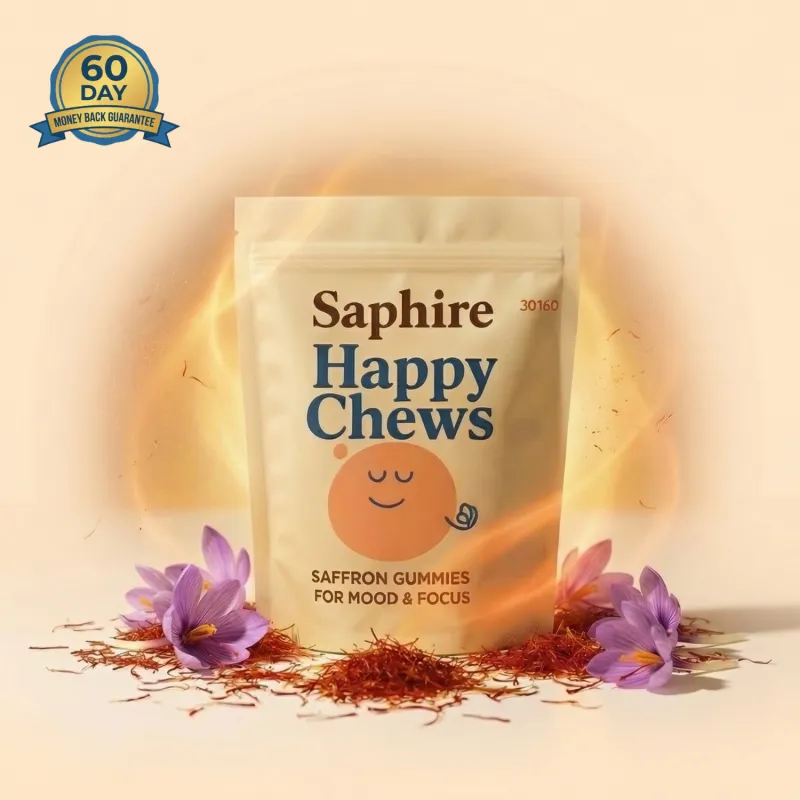
Saphire Happy Chews.
Saphire has a big following: 4.8 stars from over 12,000 reviews on its own site. At one gummy a day, a $35 pack lasts a kid two months, the lowest cost per month here. They're sugar-free, sweetened with maltitol and isomalt, which are sugar alcohols and can upset some kids' stomachs.
Then the panel. Each kids gummy holds 4.425 mg of a 10:1 saffron extract, which the label counts as 44.25 mg of saffron. The calming add-ins are token amounts: 1 mg of L-theanine, 1 mg of GABA, half a milligram of magnesium.
The bigger problem is St. John's Wort. Their product page description lists it. Their FAQ says there's none. An Amazon listing title includes it. I'd want a straight answer before anything goes near a child, and I couldn't get one from their own pages. One Amazon reviewer wrote, "These do not have the same ingredients as the Saphire Happy Chew website." On Trustpilot they sit at 2.8, mostly over subscriptions. One review just says, "Extremely difficult to cancel."
Their ads also compare saffron to a prescription ADHD medication. I don't compare anything to a child's medication, and I'd be careful with any brand that does.
What I'd expect a mom to see: a kid who happily eats one gummy a day, and a parent who can't be sure what he's eating. Two months for $35 is cheap. It isn't cheap enough to guess.
Sub-scores
Evidence in kids with ADHD5.0
Dose vs studied4.2
Sugar & fillers6.4
Easy for kids8.6
Label honesty3.6
Value8.4
Liked
a sugar-free gummy kids take
lowest cost per month
a large review base
Held back
4.4 mg of extract per gummy
token add-in doses
St. John's Wort on and off the label
sugar alcohols
subscription complaints
Bottom line: Cheap and easy to take. But when a brand's own pages disagree about whether St. John's Wort is in it, I can't tell you for certain what's in it, and for a child, that's where I stop.
#4 · Right Ingredient, Tiny Amount
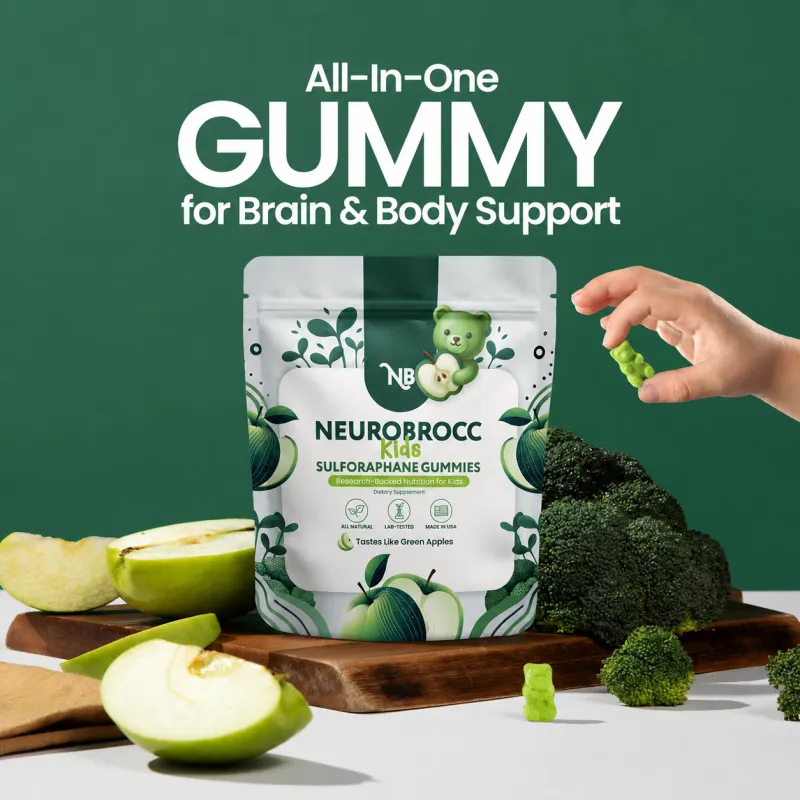
NeuroBrocc Kids Sulforaphane Gummies
The same ingredient as #1. About 1/40th of the amount.
C5.4/10Overall grade
Price: $39.99 a bag on AutoShip · $49.99 one-time · 2 gummies a day, ages 3 and up
Guarantee: 60-day money-back
NeuroBrocc Kids Sulforaphane Gummies.
NeuroBrocc is probably the best-known kids sulforaphane gummy, and it includes white mustard seed as an enzyme source, which I like. It's the same ingredient as #1, so it scores well on evidence.
Before I gave anything to my grandson, I did the math on every label here. Two of these gummies a day is 0.4 mg of sulforaphane. Two Rejoin capsules are 32 mg, 80 times more. That's the difference between noticing something by week 8 and noticing nothing, and paying $49.99 a bag for the nothing. The front of the pack says "2 gummies = 2 lbs of broccoli." The back says 0.4 mg. Both are on the same package.
The gummies also carry 2 g of added sugar a day, from organic cane sugar and glucose syrup, and it's the most expensive per month on this list. The review numbers on one product page don't match each other: 80K in one spot, 7,800+ in another, 3,400 in a third. A parent in a Facebook group wrote that they "saw zero results. And they taste funky. They smell awful."
Sub-scores
Evidence in kids with ADHD8.4
Dose vs studied2.2
Sugar & fillers4.8
Easy for kids7.4
Label honesty5.6
Value4.2
Liked
the right ingredient
includes an enzyme source
a gummy for ages 3 and up
Held back
0.4 mg sulforaphane a day
2 g added sugar
priciest per month
review counts that contradict each other
taste complaints
Bottom line: If you want sulforaphane for your child, the ingredient is right and the amount isn't. You'd pay the most on this list for the least of it, and at 0.4 mg a day I wouldn't expect a mom to see much of anything.
#5 · Hardest Label to Trust
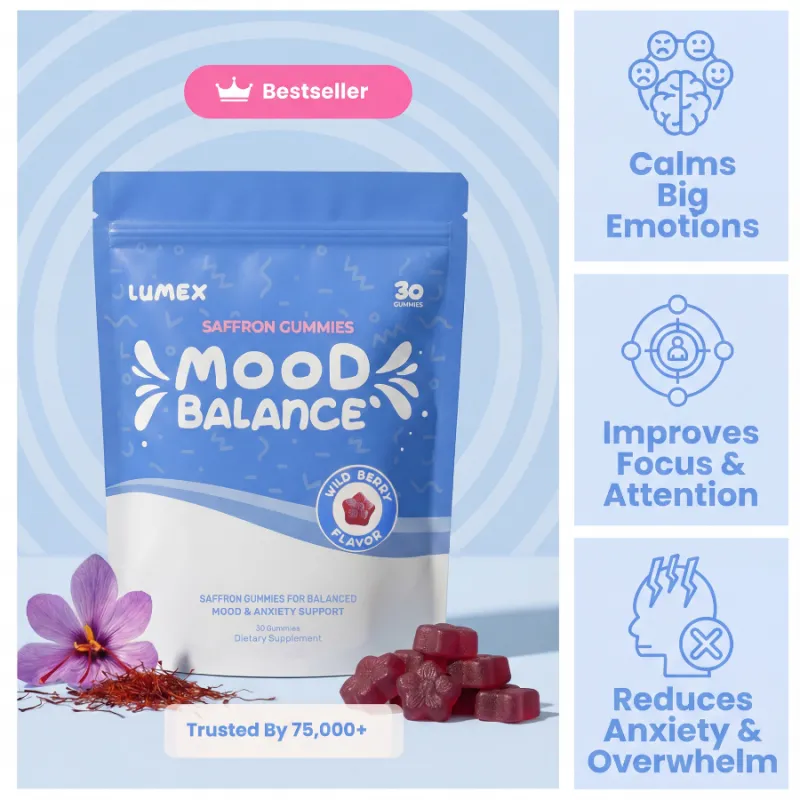
Lumexa (Lumex Mood Balance)
Cheap to start. I couldn't tell you exactly what's in it.
C−5.1/10Overall grade
Price: $39.99 for Buy 1 Get 1 Free (2 bags, about $20 a bag) · 1 gummy a day
Guarantee: 30-day money-back
Lumexa (Lumex Mood Balance).
On paper there's a lot in here: saffron, passion flower, lemon balm, lion's mane, GABA and more, 16 ingredients in one gummy, with 0 g added sugar. The Buy 1 Get 1 makes it cheap to try.
But this label worried me. It says "Total Corbohydrate," "Lemon Baim" and "Passiffore Incornato." The calories and total sugars lines are blank. There's no other-ingredients list on the panel image at all. The product page has sentences about milk thistle and aged garlic that belong to other products. Each gummy also has 5 mg of iron, which is worth running past your pediatrician if your child takes any other vitamin. The guarantee is 30 days, the shortest here, and Trustpilot sits at 2.8 from 12 reviews.
What I'd expect a mom to see: a cheap first bag, and no way to know what she's judging when she judges it. If you can't read the label, you can't tell what did anything, or what didn't.
Sub-scores
Evidence in kids with ADHD4.6
Dose vs studied4.0
Sugar & fillers5.8
Easy for kids7.2
Label honesty1.8
Value7.0
Liked
cheap entry with the BOGO
a broad formula
0 g added sugar
Held back
typos and blank fields on the panel
no other-ingredients list
page copy lifted from other products
iron in a daily gummy
30-day guarantee
Bottom line: When a label has blanks and typos, I can't tell a mom what her child is swallowing. A low price doesn't fix that. That's why it's last.
Buying guide: what to check on any label before you buy
1. Find the main ingredient and its milligrams. Skip "2 lbs of broccoli" and blend totals. For sulforaphane, look for it on its own line, in mg.
2. Read the sugar line and the small print. Cane sugar and glucose syrup are sugar. Maltitol and isomalt are sugar alcohols.
3. Look for either/or ingredients and blanks. "Monk fruit or stevia" means you don't know which one you got. A blank line means nobody filled it in.
4. Count how many a day. Four chewables every morning is four chances for a standoff.
5. Read the guarantee's fine print. If refunds only cover unopened bottles, you can't try it and still get your money back.
6. Take the label to your pediatrician. Especially if your child is on medication.
Frequently Asked Questions
Does my child have to stop his medication to try this?
No. In the 2025 trial, kids 6 to 11 all kept their usual ADHD medication. Sulforaphane was added on top. Parents and teachers saw more improvement than with placebo. Never stop or change a medication on your own. Talk to your pediatrician first.
How do I give it to a kid who won't swallow pills?
Talk to your pediatrician first. For kids, it's one or two capsules a day (16 mg each), opened into something cold like yogurt, applesauce or a smoothie. Two capsules is 32 mg, in line with the 30 mg a day used in the 2025 trial. If he can swallow them whole, that works too. Cool, never hot.
Is sulforaphane safe for kids?
Sulforaphane has been given to children aged 3 to 12 in supervised trials, with side effects similar to placebo. Your pediatrician knows your child, so start there.
How long before we'd notice anything?
The 2025 trial measured its results at 8 weeks, so that's the first point I'd judge anything at. In my clinic, nothing gets judged before its trial window. The guarantee runs 90 days, the study window plus breathing room, and three bottles cover all 90 days, which is why Buy 2 Get 1 Free is the one I'd point you to.
Can't he just eat more broccoli?
If he'll eat it, great. But broccoli sprouts carry up to 100× more of the raw ingredient than grown broccoli, and I've yet to meet the cracker-only kid who'll eat a bowl of bitter sprouts. A couple of capsules in cold yogurt is the easier route.
What about saffron? Three of these are saffron products.
Saffron is a different approach from sulforaphane. I'm not going to referee the saffron research, so I ranked those three on what I can read for myself: the dose on the label, the sugar, and whether the label is honest. On those, you can see where they landed.
What if it doesn't work for him?
Rejoin has a 90-day money-back guarantee. Not for you? Send the bottle back, even opened. Every cent refunded.
The Verdict
Twelve years in, this is what I'm sure of. The kid falling apart in the back seat isn't bad, and the mom driving isn't failing. It was never his fault. It was never yours.
The gummies and meltables on this list are easy to buy, and most of them are easy to take. But when I line the labels up against what's actually been studied in kids 6 to 11 with ADHD, only one gives a child a real amount of that ingredient, with no sugar, in a form that works for a kid who won't touch anything green.
If he lives on crackers: two capsules in a spoonful of cold yogurt is the smallest ask on this list.
If you've already tried the gummies: turn the pack over and check the milligrams. That's usually your answer.
If he's already on medication: so were the kids in the 2025 trial. Sulforaphane was added on top. Talk to your pediatrician first.
If your gut is telling you this is more than a phase, listen to it.
★ My Top Pick
Rejoin Daily Defense
The studied ingredient. The studied amount. No gummy.
In my clinic I have one rule: nothing gets judged before its trial window. The study measured at 8 weeks. A 90-day guarantee is the study window plus breathing room.
Buy 2 Get 1 Free · $32.95 a bottle on subscribe · 90-day money-back guarantee
About the author
Maren Whitcomb, OTR/L
Maren runs a small pediatric occupational therapy clinic out of a converted house, where she has spent 12 years on the floor with kids who find the school day hard. At home, she gives Rejoin to her 8-year-old grandson.
She keeps a jigsaw puzzle going in the waiting room that has been missing one piece since 2019.